
What it is
Kashmiri red chilli is the dried ripe fruit pod of Capsicum annuum, a member of the nightshade family Solanaceae. It’s grown as a speciality pepper in cold and temperate hill regions and used in Indian cooking for colour and gentle warmth.
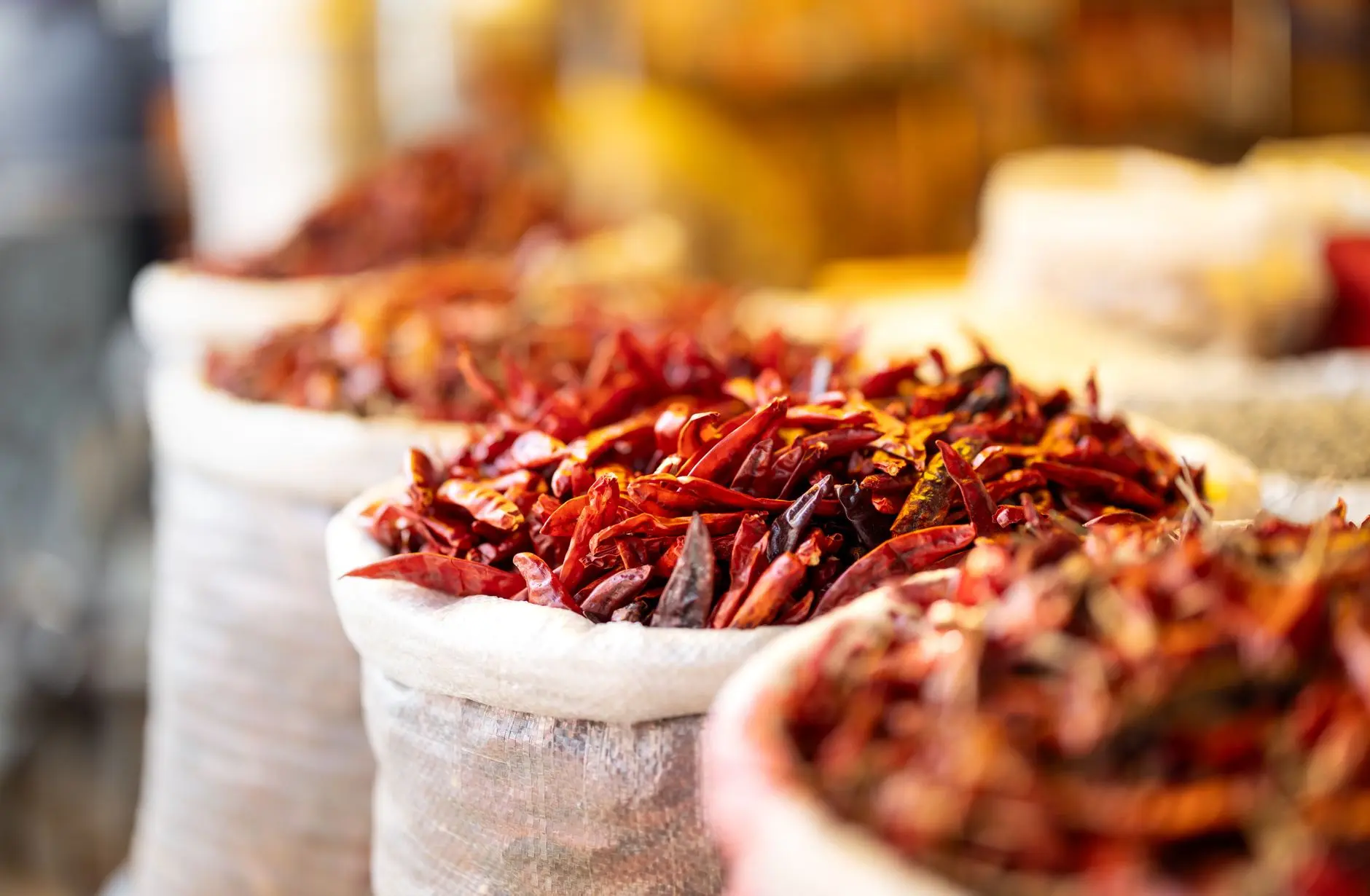
You’ll find it sold as whole dried pods, commercially dried and finely pulverised into a bright crimson powder, or as whole pods that are rehydrated and ground into a smooth, intensely red paste.
Flavour and aroma
It gives an earthy aroma with a subtly sweet, fruity background from sun drying. When toasted in hot oil it shows a mild smoky note and imparts a gentle, mellow warmth rather than sharp heat, at about 1,000–2,000 Scoville units.
Cooking with it
When to add it
Use it at tadka — whole or powdered Kashmiri chilli goes into hot oil or ghee to release pigment and colour the fat. Mix ground Kashmiri chilli with yogurt, mustard oil and spices as the main colouring agent for marinades for grilled meats and paneer.
During sauce-making add the powder with onions, ginger, garlic and tomatoes to build a rich red gravy. It’s indispensable in Kashmiri Wazwan dishes like Rogan Josh for that signature red, and it’s the natural colourant in tandoori marinades, butter chicken and paneer tikka.
Substitutes
- Byadagi chilliuse in equal proportion as whole dried pod or ground powder
Origin and where it grows
Chilli peppers originated in Central and South America and were introduced to the Indian subcontinent by Portuguese traders in the late 15th to 16th century. The Kashmir Valley in Jammu and Kashmir is the traditional cold-climate growing region for this speciality pepper, and Himachal Pradesh also cultivates Kashmiri-type varieties across temperate hill zones.
Grown in
Notable varieties
- Kashmiri Chilli
Jammu and Kashmir
Buying and storing
How to pick good quality
Genuine dried Kashmiri chillies have wrinkled, shrivelled, elongated pods with deep burgundy-red skin rather than bright glossy orange.
Simple adulteration check
Follow FSSAI DART checks: sprinkle red chilli powder on water — artificial colours descend immediately as bright red streaks, while pure powder settles slowly without tinting the water. To check for brick powder or soapstone, rub the sediment from the water test between your fingers; a gritty feel indicates brick dust, a smooth soapy feel indicates soapstone.
Storage
Store in an airtight, moisture-proof glass or stainless steel container away from direct sunlight, or keep refrigerated to prevent pigment photodegradation.
Nutrition
Kashmiri red chillies are rich in natural carotenoid pigments, primarily capsanthin and capsorubin, and contain provitamin A and vitamin C.
Frequently asked questions
What is Kashmiri red chilli (Kashmiri lal mirch)?
It’s the dried ripe fruit pod of Capsicum annuum (nightshade family), sold as whole dried pods, bright crimson powder, or rehydrated into a red paste.
Is Kashmiri chilli very hot?
No — it gives gentle, mellow warmth rather than sharp heat, around 1,000–2,000 Scoville Heat Units.
When should I add Kashmiri chilli in the pan?
Add whole or powdered chilli into hot oil or ghee at tadka to release colour, or simmer the ground powder with onions, ginger, garlic and tomatoes during sauce-making.
How can I check if red chilli powder is adulterated?
Per FSSAI DART, sprinkle powder on water: artificial colour shows as bright red streaks immediately, while pure powder settles slowly; rub the sediment to feel for grit (brick dust) or a soapy smoothness (soapstone).
What can I use instead of Kashmiri chilli?
Byadagi chilli from Karnataka gives a comparable deep ruby colour and mild pungency; use it in equal proportion as whole pod or ground powder.
Related ingredients
 Spice
SpiceBlack cardamom
बड़ी इलायची (Badi elaichi)
 Spice
SpiceCumin seeds
जीरा (Jeera)
 Spice
SpiceCinnamon
दालचीनी (Dalchini)
 Spice
SpiceIndian bay leaf
तेज पत्ता (Tej patta)
 Spice
SpiceNutmeg
जायफल (Jaiphal)
 Spice
SpiceStar anise
चक्र फूल (Chakra phool)