Does Litti Chowkha and Dal Bati same?
Discover the core differences between Litti Chokha and Dal Baati, from their regional origins and unique ingredients to their health benefits and common cooking pitfalls.
By the Pakwanpedia teamUpdated 4 October 20264 min read
Regional Origins and Classic Pairings
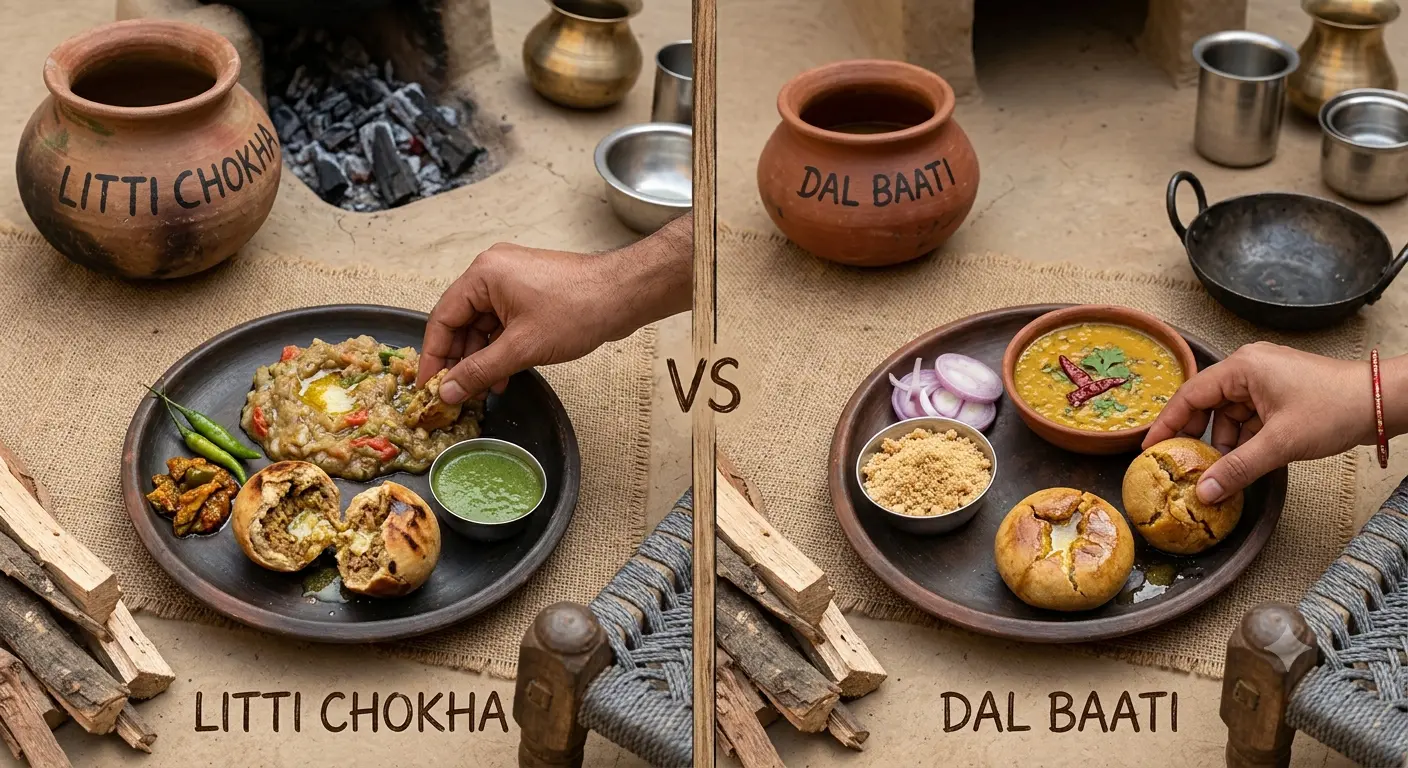
Start with the map: litti chokha speaks Bhojpuri-Magadh. It belongs to the belt that runs through Bihar, Jharkhand, and the eastern end of Uttar Pradesh. Baati tells a western story, rooted in Rajasthan, the Malwa region of Madhya Pradesh, and parts of Gujarat. Cooked at home or ordered outside, each dish carries the rhythms of its region, the way aunties season and neighbours talk about dough. If you grew up in one of these places, the names feel like everyday shorthand for comfort.
When you travel between these kitchens, you notice habits more than rules. In Bihar and Jharkhand, friends invite you for litti chokha with the same easy pride that families in Rajasthan and Malwa reserve for baati. Menus read differently, thalis are arranged their way, and you learn to eat what the land calls its own. Save the side stories for later; right now, remember the split: Bhojpuri-Magadh leans to litti chokha, the west to baati, and both feel right at home where they began.
Core Ingredient and Structural Differences
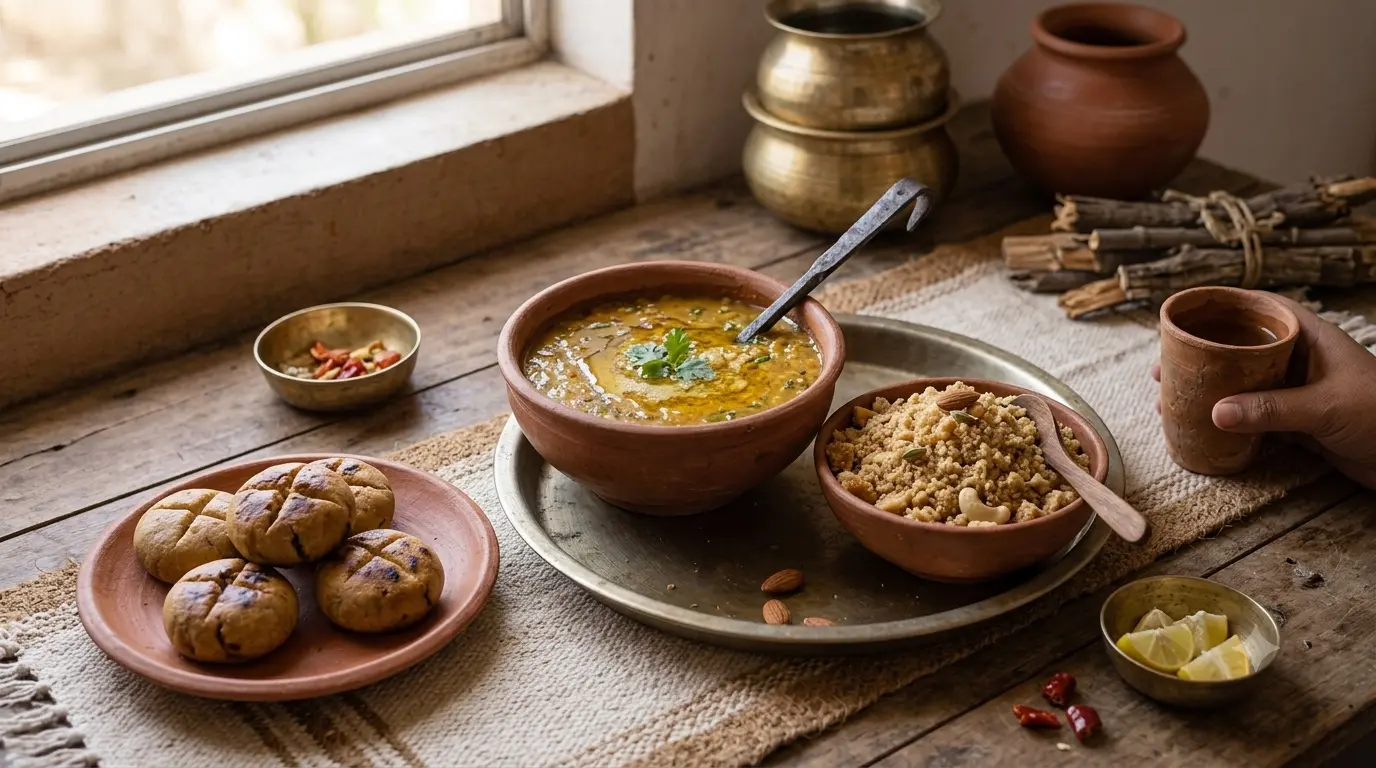
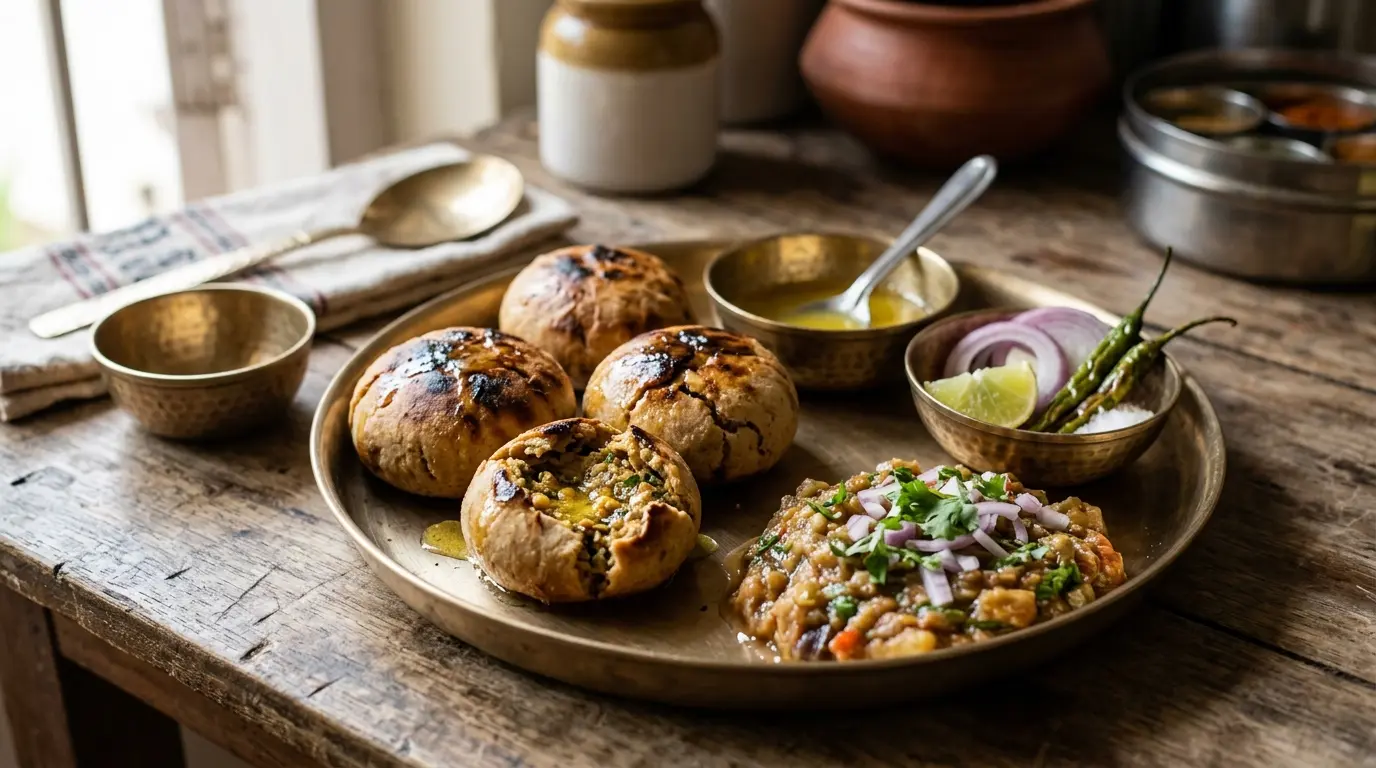
The bite tells you everything. Litti hides a heart, baati does not. Litti is stuffed with sattu, the roasted black chana flour, so the center feels alive: ajwain and kalonji pop, crushed garlic and green chillies warm the tongue, lemon juice lifts it, and a splash of spicy mango or red chilli pickle brine can sneak in. Baati stays a solid, unstuffed ball of whole-wheat dough, so what you taste first is the grain and the roast, not a separate masala layer opening up.
Fat pulls the flavors in different directions. Litti’s sharpness comes from raw, cold-pressed mustard oil mixed into the sattu and also worked into the chokha, so you get a clean, pungent edge with each bite. Baati leans on desi ghee: it goes into the dough as moyan and then gets brushed over, even soaked into the cooked crust. That ghee-first approach shapes the taste you chase on the plate, while litti’s mustard oil keeps the stuffing bright and assertive.
Traditional Cooking Methods and Occasions
For true litti, the magic sits in the coals. The dough balls are roasted right over the embers of dried cow-dung cakes, upla or goitha, and that touch gives an earthy, smoky finish you can smell before you bite. You turn them patiently so the crust hardens without scorching. Baati, by contrast, rewards a steady, even roast, letting the grain taste clean and toasty. Both feel best in winter, when hearty whole grains, warming spices and rich ghee help sustain stamina and body temperature during chilly months.
Occasions tell their own story. Dal Baati Churma in Rajasthan is the showstopper for lavish celebratory feasts, weddings and those weekend family gatherings you plan around a long meal. Litti chokha keeps a different rhythm: informal, low-cost street food and also a ritual meal during rural pilgrimages like the Panchkosi Jatra in Buxar. The contrast is easy to taste: slow plates meant for ceremonies, and a quick, smoky ball you eat standing up.
Nutritional Benefits of Litti and Baati
The cooking tells the story. Litti and baati are dry-roasted or baked, not deep-fried like puris or bhaturas. That choice keeps the grain honest: you keep the whole-wheat bran along with the complex carbohydrates. The result is a toasty crust and a steady chew you can taste from the first crack. It suits a thali that doesn’t need extra grease on the plate, just heat and time on the fire. Simple technique, clear flavors, grain left as grain.
Litti also brings sattu to the table. The sattu filling offers plant protein and dietary fiber, and it carries a low glycemic index, so the meal gives long-lasting satiety compared to plain bread. If you’re packing a lunch, litti earns its space because that filling keeps you feeling full and steady. Baati stays simpler, but the dry-roast still gives you that grain-first bite without deep frying.
Cooking and Consumption Pitfalls to Avoid
Resist the urge to blast heat. With both litti and baati, a high flame browns fast and fools you. The crust looks ready, but the dense dough inside stays undercooked and sits heavy later. Roast or bake at a steady, moderate temperature so the heat reaches the center. Turn the balls regularly and give them time. If you rushed a batch, split one open and check before serving. An evenly cooked core saves you from the raw bite that is hard to digest and can cause abdominal discomfort.
At the table, watch the clock and the ladle of ghee. Large, ghee-drenched helpings of baati or litti late in the evening are best avoided. That dense mix of roasted whole grains, sattu, and fats takes time to digest and can set off nighttime acidity. Keep portions modest at night, skip extra ghee on top, and leave some breathing room before bed. If you love a rich plate, enjoy it earlier in the day and go easier late in the evening so the meal stays kind to you.
This story was written with AI help from facts we checked against more than one source, then reviewed and edited by our editors. Spotted a mistake? Tell us on our contact page.