
What it is
Pickle masala, or achar masala, is a traditional Indian spice blend built from split mustard seeds, fenugreek seeds, fennel, nigella, turmeric, red chilli and a touch of asafoetida. It is prepared as a coarse, granulated powder, not an ultra-fine grind.
Across regions you’ll hear it called Methia Masala or Athana no Sambhar (Gujarati), Avakaya Podi (Telugu), Achari Masala (Punjabi/North India), and Acharer Masala (Bengali).
Flavour and aroma
Expect assertive pungency from crushed mustard seeds and asafoetida, with sharp heat from red chillies and mustard compounds. Fennel and nigella bring a sweet-herbaceous, intensely aromatic layer over earthy, tart notes. The flavor deepens as the spices macerate in oil.
Cooking with it
When to add it
For pickles, this is the essential curing and flavoring base for seasonal jars like aam ka achar and nimbu achar. The coarse grind lets the spices slowly release into the oil and salt.
For cooked food, add it straight into marinades for tikkas or tandoori platters. For achari curries, bloom the mix in hot mustard oil during tadka; for braised vegetable dishes, add it during cooking so the gravy takes on the spice evenly.
In western India, serve the dry masala alongside thepla and khakhra, or toss a spoon into raw cabbage or papaya salads for a sharp, aromatic bite.
Origin and where it grows
Pickle spice formulations arose across the Indian subcontinent as specialized preservation mixes that combine carminative, antimicrobial spices with salt and oil. The blend is designed for curing fruits and vegetables while building flavor. As the spices sit in oil, their warmth and complexity mature.
Buying and storing
How to pick good quality
Keep the grind dardara: coarsely crack the spices rather than powdering them, so the curing oil doesn’t go muddy and the aroma releases slowly.
Lightly warm the whole seeds before grinding to drive off latent moisture and awaken volatile oils without any burnt taste.
Simple adulteration check
For synthetic dyes: per FSSAI DART guidance, sprinkle a pinch into water; artificial colors show immediate descending color trails.
For starch fillers: use the FSSAI tincture iodine test; a blue color indicates added starch.
Storage
Store in an airtight glass or ceramic container away from direct sunlight and moisture. Use only dry utensils when scooping.
Shelf life: Six to twelve months when properly sealed in a cool, dry place.
Frequently asked questions
What is Pickle masala made of and what texture should it be?
It’s a coarse, granulated blend of split mustard seeds, fenugreek seeds, fennel, nigella, turmeric, red chilli and asafoetida. Avoid ultra-fine powdering.
When should I add achar masala in cooking?
Add it into marinades for tikkas or tandoori. For achari curries, bloom it in hot mustard oil during tadka. In braised vegetable dishes, add it during cooking so the gravy absorbs it evenly.
What are regional names for Pickle masala?
Gujarati: Methia Masala or Athana no Sambhar; Telugu: Avakaya Podi; Punjabi/North India: Achari Masala; Bengali: Acharer Masala.
How do I check for adulteration in a spice mix like this?
For dyes, sprinkle a pinch in water; synthetic colors leave quick descending trails. For starch fillers, the FSSAI tincture iodine test turns a starch-laced sample blue.
How should I store it and how long does it last?
Keep it in an airtight glass or ceramic jar, away from sunlight and moisture, using only dry spoons. It keeps best for six to twelve months.
Related ingredients
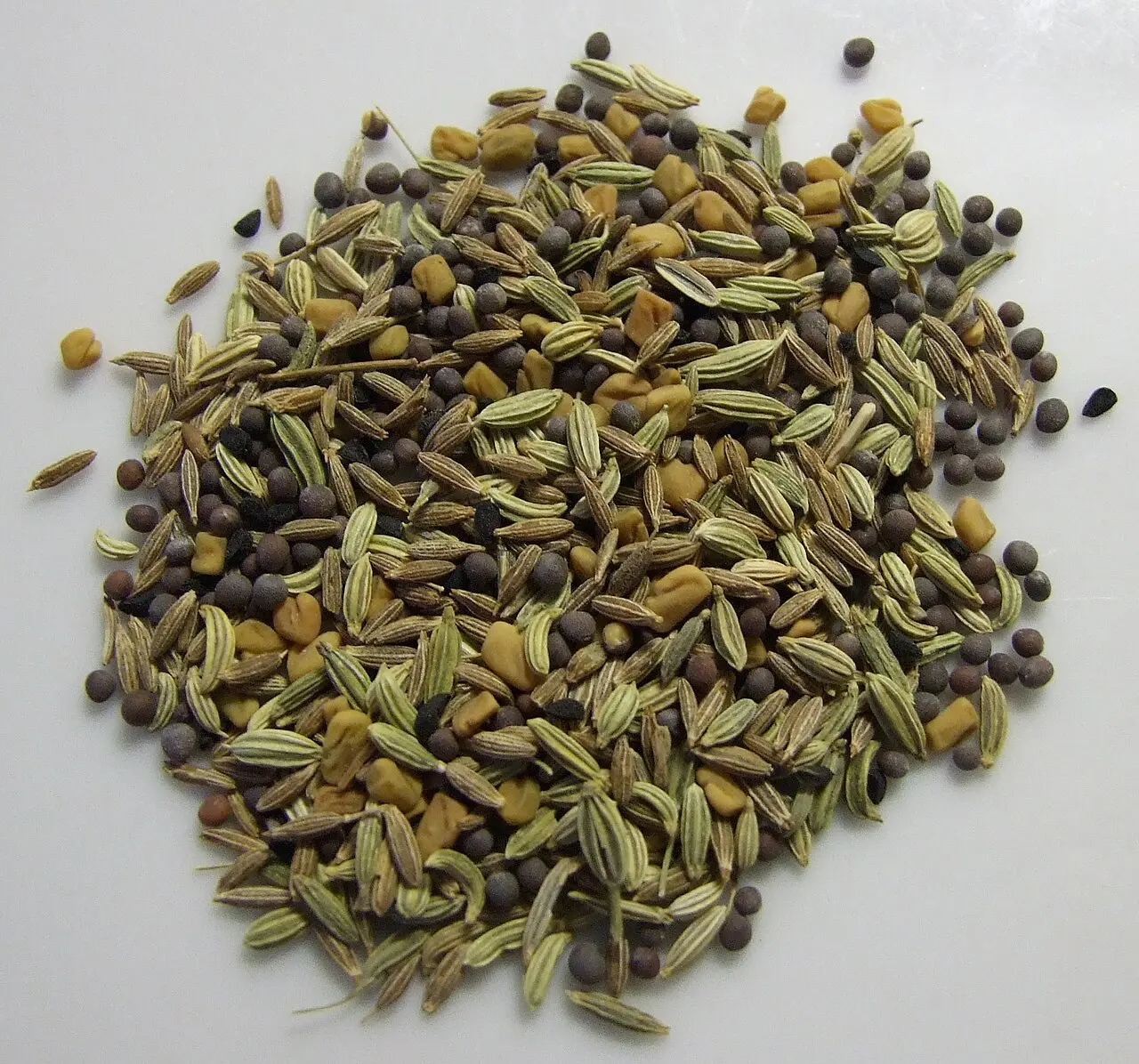 Spice blend
Panch phoron
पंच फोरन (Panch phoron)
 Spice blend
Pav bhaji masala
पाव भाजी मसाला (Pav bhaji masala)
 Spice blend
Rasam powder
रसम पाउडर (Rasam powder)
 Spice blend
Chaat masala
चाट मसाला (Chaat masala)
- Spice blend
Garam masala
गरम मसाला (Garam masala)
- Spice blend
Goda masala
गोडा मसाला (Goda masala)