Ingredients
For the Litti Dough
For the Sattu Filling
For the Chokha
For Serving
Method
Litti preparation
- 1
In a bowl, mix Whole wheat flour, Salt, Baking soda (optional), and Carom seeds. Rub in Ghee until the atta looks sandy. Add water a little at a time and knead a firm, semi-stiff dough for 3 to 4 minutes; cover with a damp cloth and rest 20 to 30 minutes.
5 minTip: The dough should feel tighter than chapati dough so it holds the filling.
- 2
For the filling, combine Sattu, Ginger, Garlic, Green chilli, Coriander leaves, Carom seeds, Nigella seeds, Salt, Lemon (juice), Pickle masala, and Mustard oil. Mix well; sprinkle a few drops of water only if it’s too powdery so it clumps when pressed.
5 minTip: You should smell the sharp mustard oil and achar masala—this is the signature note.
- 3
Divide the rested dough into equal lemon-sized balls. Flatten one into a small bowl in your palm, add a heaped spoon of filling, pinch to seal tightly, and roll smooth so there are no cracks.
10 minTip: If a crack appears, dab with a wet fingertip and smooth it out.
- 4
To bake: preheat the oven to 190°C. Arrange littis on a tray and bake 35 to 40 minutes, flipping halfway, until browned with small cracks and they sound hollow when tapped.
40 minTip: Traditional option: roast over low charcoal/wood embers, turning often, until evenly blistered.
- 5
Stovetop option: heat an appe (paniyaram) pan on medium. Place littis in the cavities and cook, turning every few minutes, until all sides are evenly browned and cooked through.
25 minTip: Keep the heat medium so the crust doesn’t burn before the center cooks.
Pro tips: Pickle masala in the sattu: A spoon of achar masala adds tang and warmth, making the dry sattu taste lively instead of flat. · Use raw mustard oil: Unheated mustard oil in both filling and chokha gives the sharp punch that says Bihar in one sniff. · Appe pan litti for urban kitchens: No oven? The appe pan browns litti evenly on the stovetop and keeps the shape intact.
Chokha preparation
- 6
While the littis cook, roast Brinjal and Tomato directly over a gas flame (medium) on a wire rack, turning until skins are blackened and the flesh has collapsed. Boil Potato in salted water until tender, then peel.
15 minTip: Roasted brinjal should feel soft all the way through when pressed with tongs.
- 7
Peel off the charred skins from Brinjal and Tomato. In a bowl, mash them with the boiled Potato until coarse and well combined.
5 minTip: Leave some texture; chokha shouldn’t be a paste.
- 8
Stir in Onion, Garlic, Green chilli, Coriander leaves, Mustard oil, and Salt into the mash. Taste and adjust salt or mustard oil to your liking.
2 minTip: Add mustard oil at the end so its aroma stays bright.
Pro tips: Roast brinjal and tomato on open flame: Direct fire chars the skin and builds the rustic smokiness that chokha needs.
Serving
- 9
Melt the Ghee in a small bowl. Crack each hot litti slightly or split it open, then dunk it fully in the melted ghee so it soaks in.
2 minTip: Cracking helps the ghee seep into the sattu core.
- 10
Serve the ghee-soaked litti right away with a generous scoop of warm chokha on the side.
Tip: A tiny drizzle of raw mustard oil on the chokha keeps the flavors lively.
Pro tips: Dunk the litti fully in ghee: Ghee softens the sattu core and rounds off the edges of mustard oil and chillies.
Watch it made
Serving and storage
How to serve
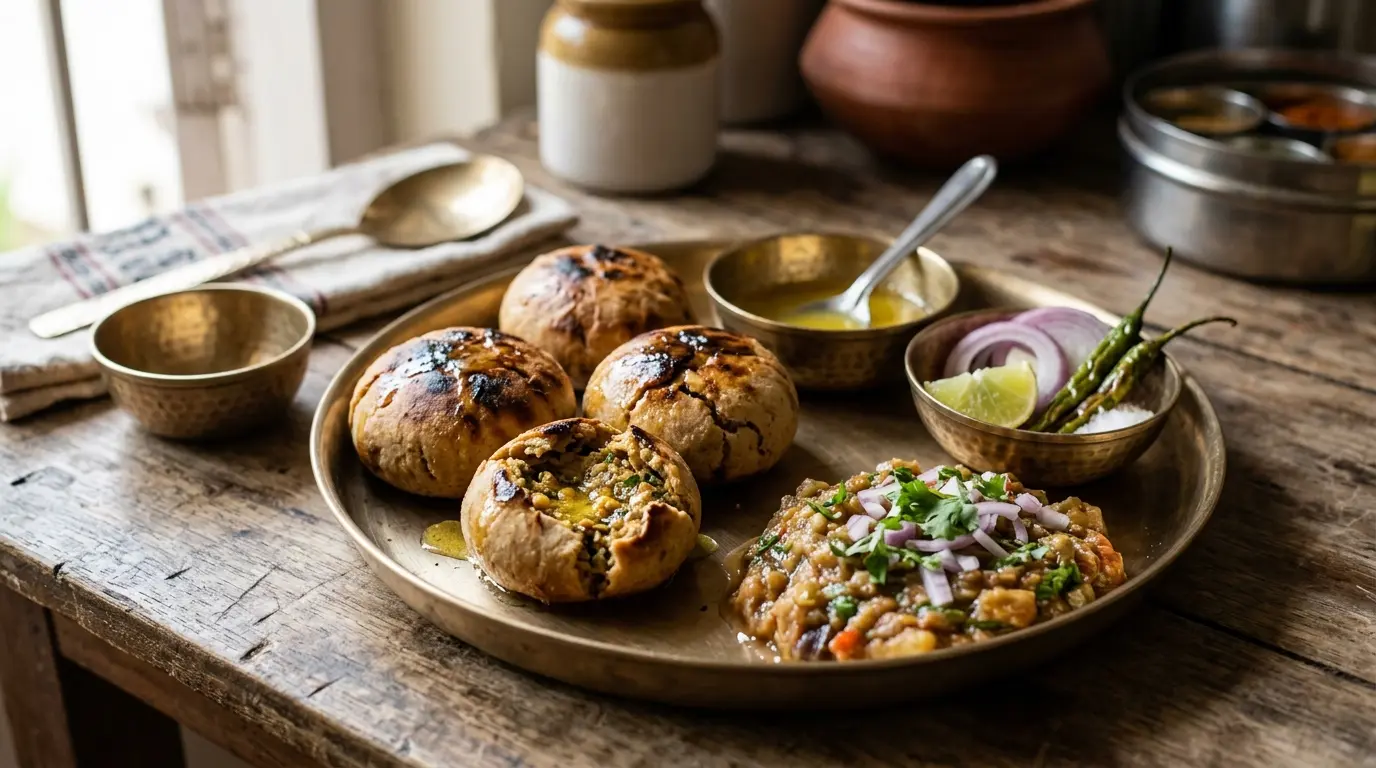
Serve hot litti cracked and dipped in melted ghee with a big scoop of smoky chokha. Keep a small katori of extra ghee on the side and a few drops of raw mustard oil to finish the chokha if you like.
Storage and reheating
Unsmeared litti (not dipped in ghee) keeps well at room temperature for a day; refrigerate up to 4 days and reheat in an oven or on a tawa until hot. Chokha is best the same day; refrigerate up to 24 hours and bring to room temperature or warm gently before serving.
Frequently asked questions
Can I make litti without an oven?
Yes. Use an appe (paniyaram) pan on medium heat, turning often, or roast over low charcoal/wood embers if you have them.
Is baking soda necessary in the dough?
No. It’s optional and gives a slightly lighter crust. Skip it for a more traditional, firmer bite.
What if my sattu filling feels too dry?
Sprinkle a few drops of water and mix again until it holds when pressed. It should stay crumbly, not pasty.
Can I skip mustard oil in chokha?
It’s the hallmark flavor here. If you’re sensitive, start with less, but a little raw mustard oil makes it taste truly Bihari.
How do I get smoky flavor without a chulha?
Roast the brinjal and tomatoes directly on a gas flame until charred. That gives the chokha a solid smoky note.
How is litti different from dal baati?
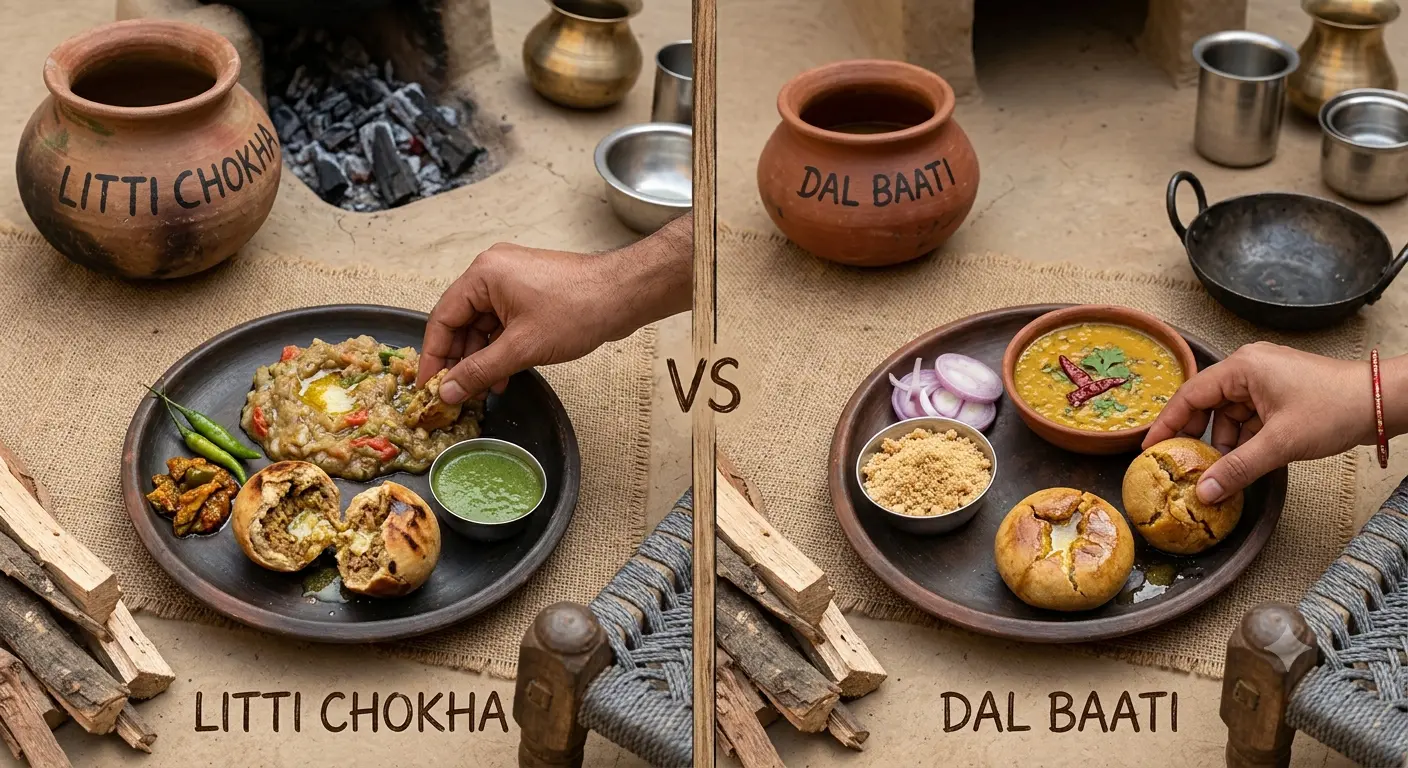
Litti has a spiced sattu stuffing and is eaten with mustard-oil-laced chokha, not dal. The taste and accompaniments are distinct.