
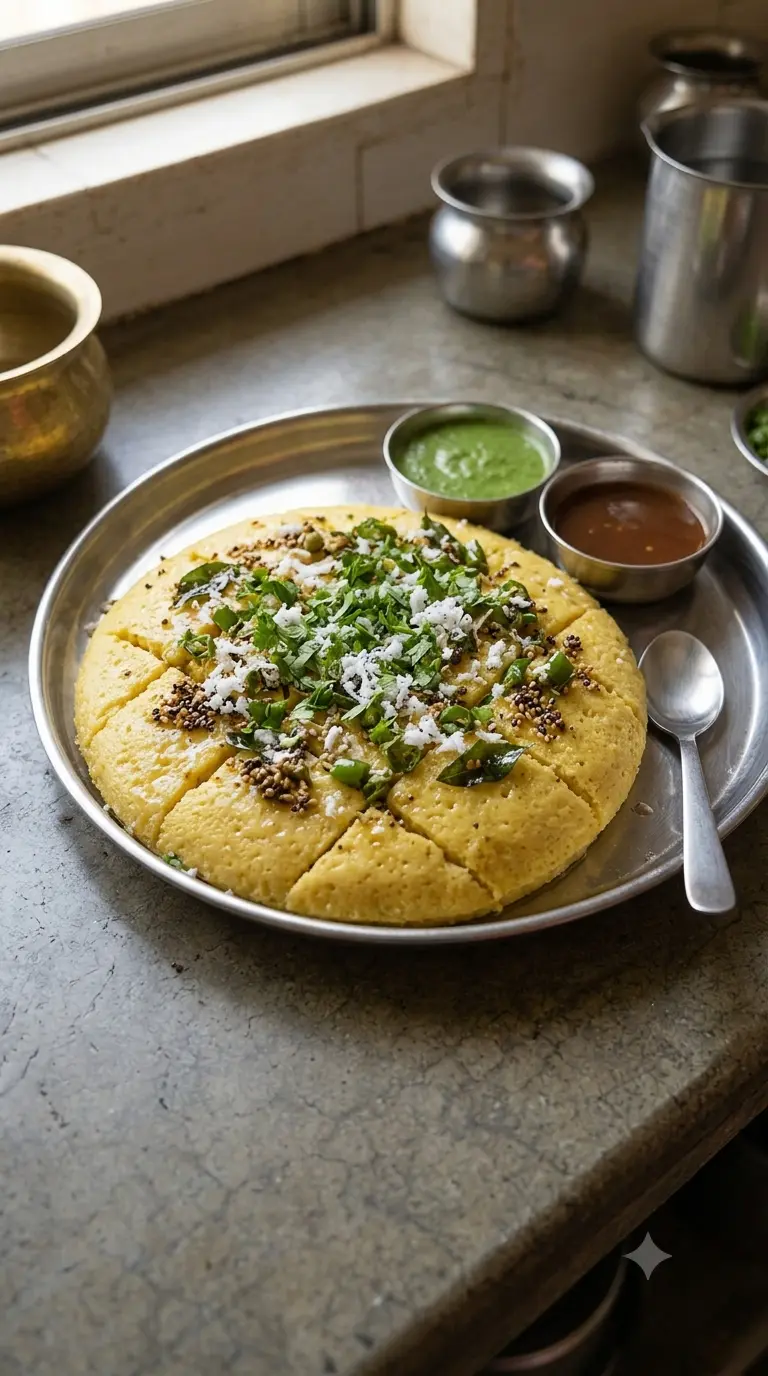
Ingredients
For the Dhokla Batter
For the Tempering (Tadka)
For the Garnish
Method
Batter preparation
- 1
Grease a thali or 7 to 8 inch round pan with a few drops of oil and set up a steamer with water on medium heat so it comes to a steady boil.
Tip: A hot, ready steamer helps the aerated batter rise immediately.
- 2
In a mixing bowl, add gram flour, semolina, salt, sugar, and turmeric. Whisk to combine and break any dry lumps.
1 min - 3
Add ginger paste, green chilli paste, lemon juice, and oil. Now whisk in about 1 cup water gradually to make a smooth, thick flowing batter with no lumps.
2 minTip: When the batter falls in ribbons and disappears in 2 to 3 seconds, the consistency is right.
- 4
Cover and rest the batter so the besan hydrates and the semolina (if used) swells slightly.
10 min
Pro tips: Go easy on turmeric: Just a couple of pinches are enough. Too much reacts with the alkaline leavener and can cause red spots. · A spoon of semolina for structure: That tiny bit of rava supports the besan so the cake doesn’t slump as it cools.
Steam the dhokla
- 5
Sprinkle fruit salt over the batter and pour about 1 tbsp water directly on it to activate. Whisk briskly in one direction until frothy and almost doubled.
1 minTip: Work fast after adding Eno; do not overmix once it rises.
- 6
Immediately pour the aerated batter into the greased pan and tap the pan lightly to level.
- 7
Place the pan in the steamer, cover, and steam on medium-high heat until a toothpick in the center comes out clean.
15 minTip: For deeper pans, you may need a couple more minutes; avoid over-steaming to keep it soft.
- 8
Remove and let it cool slightly. Loosen edges with a knife, invert onto a plate, and cut into neat squares.
5 minTip: Cutting when just warm gives cleaner edges and better absorption later.
Pro tips: Whisk in one direction: Beating the batter steadily in a single direction traps air without toughening it, giving you a light, spongy crumb. · Activate Eno with a splash: Pouring a tablespoon of water directly on the fruit salt kicks off the reaction instantly for maximum lift.
Make the tadka and finish
- 9
Heat oil in a small kadhai on medium. Add mustard seeds and let them splutter.
1 min - 10
Add sesame seeds, asafoetida, curry leaves, and slit green chillies. Fry until the leaves crisp and the sesame smells nutty.
1 minTip: Stand back when adding curry leaves; they crackle.
- 11
Pour in about 0.5 cup water carefully, then add sugar and salt. Bring to a rolling boil until the sugar dissolves fully, then switch off.
2 minTip: This sweet-salty water helps the sponge stay moist and flavorful.
- 12
Spoon the warm tempering evenly over the cooled dhokla so it seeps into the cuts. Rest a couple of minutes, then top with coriander and grated coconut.
2 minTip: Warm tadka on cooled dhokla soaks in without turning the pieces mushy.
Pro tips: Warm tadka on cooled pieces: The temperature contrast helps the seasoned sugar-water absorb evenly without making the dhokla soggy.
Watch it made
Serving and storage
How to serve
Serve slightly warm or at room temperature with green coriander-mint chutney, sweet tamarind chutney, or a side of raw papaya sambharo. Good for breakfast, teatime, or a light snack plate.
Storage
Once cooled and tempered, keep covered at room temperature for a few hours. For longer, refrigerate up to 2 days. To refresh, steam covered for 2 to 3 minutes and let it stand; add a spoon of warm tadka water if it feels dry.
Frequently asked questions
Can I use baking soda instead of Eno?
Yes. Use 0.75 tsp baking soda for this quantity. Add it just before steaming along with the lemon or citric acid and mix quickly.
Why did my khaman get red or pink spots?
Usually it’s too much turmeric reacting with the leavener. Stick to just 2 small pinches.
How long should I steam khaman dhokla?
About 15 to 20 minutes on medium-high heat for this pan size. It’s done when a toothpick in the center comes out clean.
How do I keep khaman soft and spongy?
Whisk well, activate Eno with a splash of water, steam right away, and don’t over-steam. Pour warm tempering over cooled pieces so they absorb evenly.
Is semolina necessary in the batter?
No, it’s optional. A tablespoon helps the cake hold shape and resist collapsing, but you can skip it for a purely besan version.
What’s the difference between khaman and traditional dhokla?
Khaman is an instant besan-based steamed cake using chemical leaveners. Traditional dhokla is made from a fermented batter of rice and chana dal.