
What it is
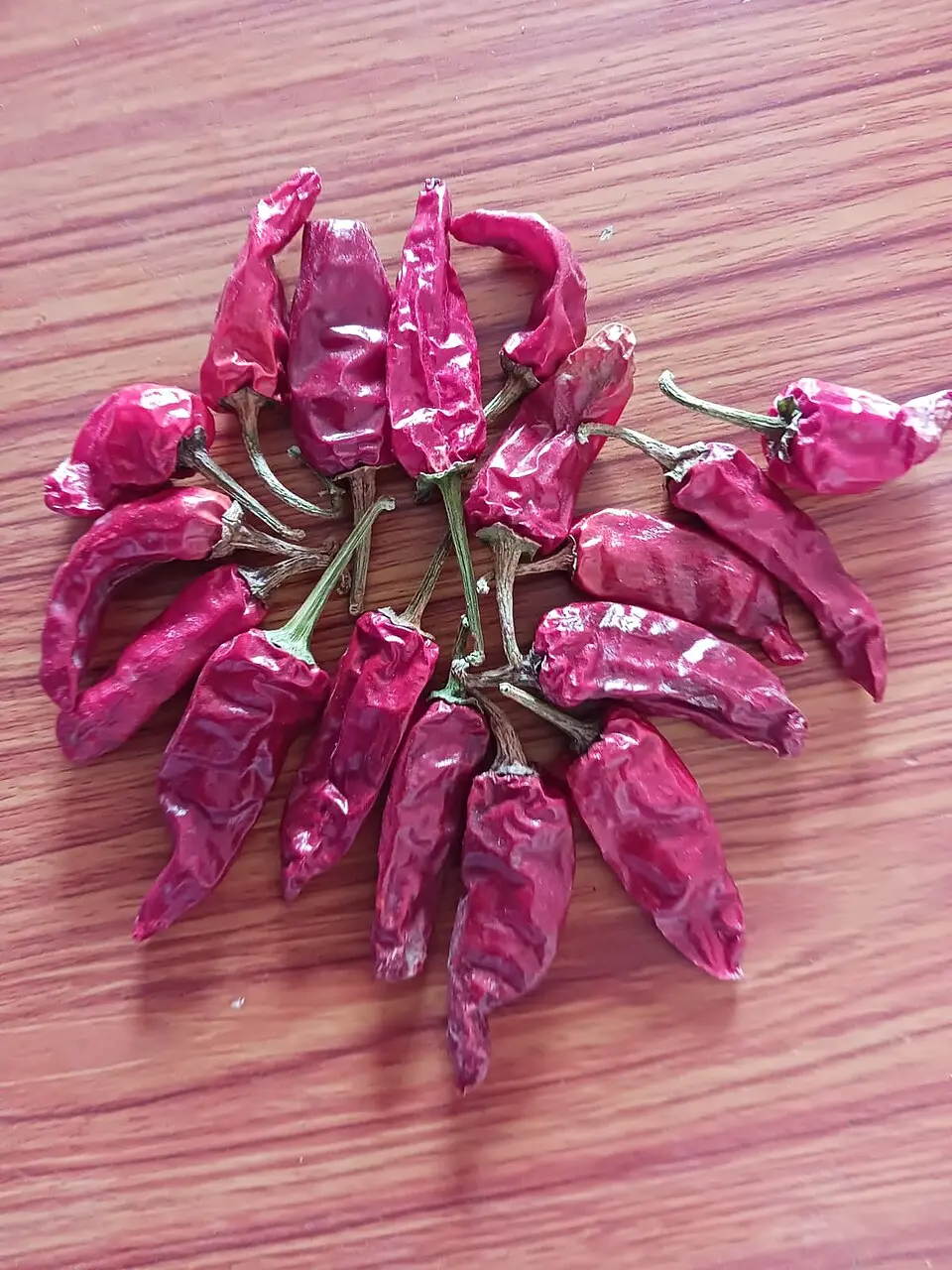
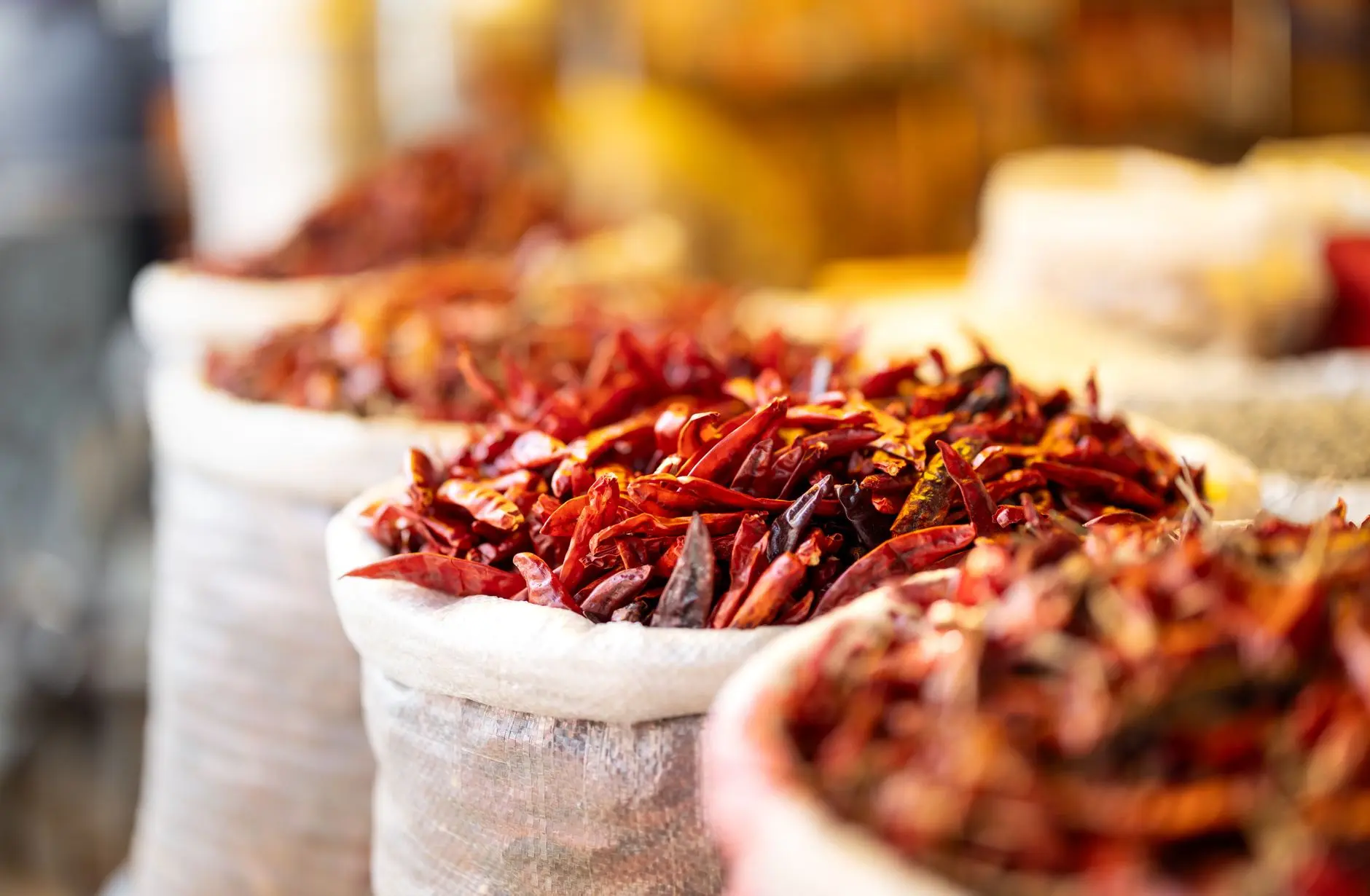
Dried red chilli is the dehydrated mature fruit of flowering plants in the genus Capsicum, predominantly Capsicum annuum, belonging to the Solanaceae family.
In Indian kitchens it is often kept whole with the stalk intact, sun dried or commercially dehydrated into crisp, shelf stable pods. You’ll also hear it called साबुत लाल मिर्च (Sabut lal mirch).
Flavour and aroma
Capsaicin in the placenta and seeds gives an intensely pungent burn, and some dried varieties are fiery in curries and chutneys. Toasted in hot oil or ghee, the chillies mellow and turn warm, nutty, and smoky as their aromatic resins move into the fat.
Cooking with it
When to add it
How much to use
For tadka, add whole chillies to sizzling oil or ghee so the fat carries their warmth and aroma; finish dal, rasam, or sambar with it.
Grind dried pods into base pastes for Goan vindaloo and Mangalorean curries, or simmer them with sauces during cooking to distribute heat evenly.
For vibrant red color with milder heat, use Kashmiri dried chillies instead of more pungent ones.
Substitutes
- Kashmiri dried chilliprovides intense natural red color with significantly lower heat
Origin and where it grows
Chillies originated in Central and South America. Portuguese merchants brought them to India during the late fifteenth and early sixteenth centuries.
Grown in
Notable varieties
- Byadagi ChilliGI tagged
Karnataka
- Guntur Sannam ChilliGI tagged
Andhra Pradesh
- Khola ChilliGI tagged
Goa
- Naga MirchaGI tagged
Nagaland
Buying and storing
How to pick good quality
Choose pods with unbroken outer skin and a uniform deep red color, with the stalk attached. They should feel firm and crisp, with no mold or insect bores.
Simple adulteration check
For chilli powder, add a little to a glass of water: if a bright red streak quickly bleeds into the liquid while it settles, it indicates a water-soluble artificial dye. Let the powder settle and rub the sediment between your fingers; a gritty feel points to brick powder or sand, while a soapy feel indicates talc.
Storage
Store whole dried chillies in an airtight container in a cool, dark, dry place, away from humid air to prevent mold and color fading.
Shelf life: 6 to 12 months when sealed against moisture
Nutrition
Dense in capsaicinoids, carotenoid pigments including capsanthin and capsorubin, provitamin A carotenoids, and dietary minerals.
Frequently asked questions
When should I add whole dried red chillies to the pan?
Add them to sizzling oil or ghee during tempering (tadka) to infuse the fat with warmth and aroma.
How many whole dried chillies for a basic tadka?
A standard home tempering uses 1 to 3 whole chillies, depending on your heat preference.
How do I get a smoky flavor from dried chillies?
Fry the whole chillies briefly in hot oil or ghee; this toasting develops deep smoky notes and a roasted aroma.
Which dried chillies give bright red color with mild heat?
Kashmiri dried chillies provide intense natural red color with significantly lower heat. Byadagi chillies are also known for low pungency and deep red color.
How can I check chilli powder for adulteration at home?
Add some powder to a glass of water; a bright red streak that quickly bleeds indicates a water-soluble dye. Let it settle and rub the sediment; gritty points to brick powder or sand, soapy points to talc.
Related ingredients
 Spice
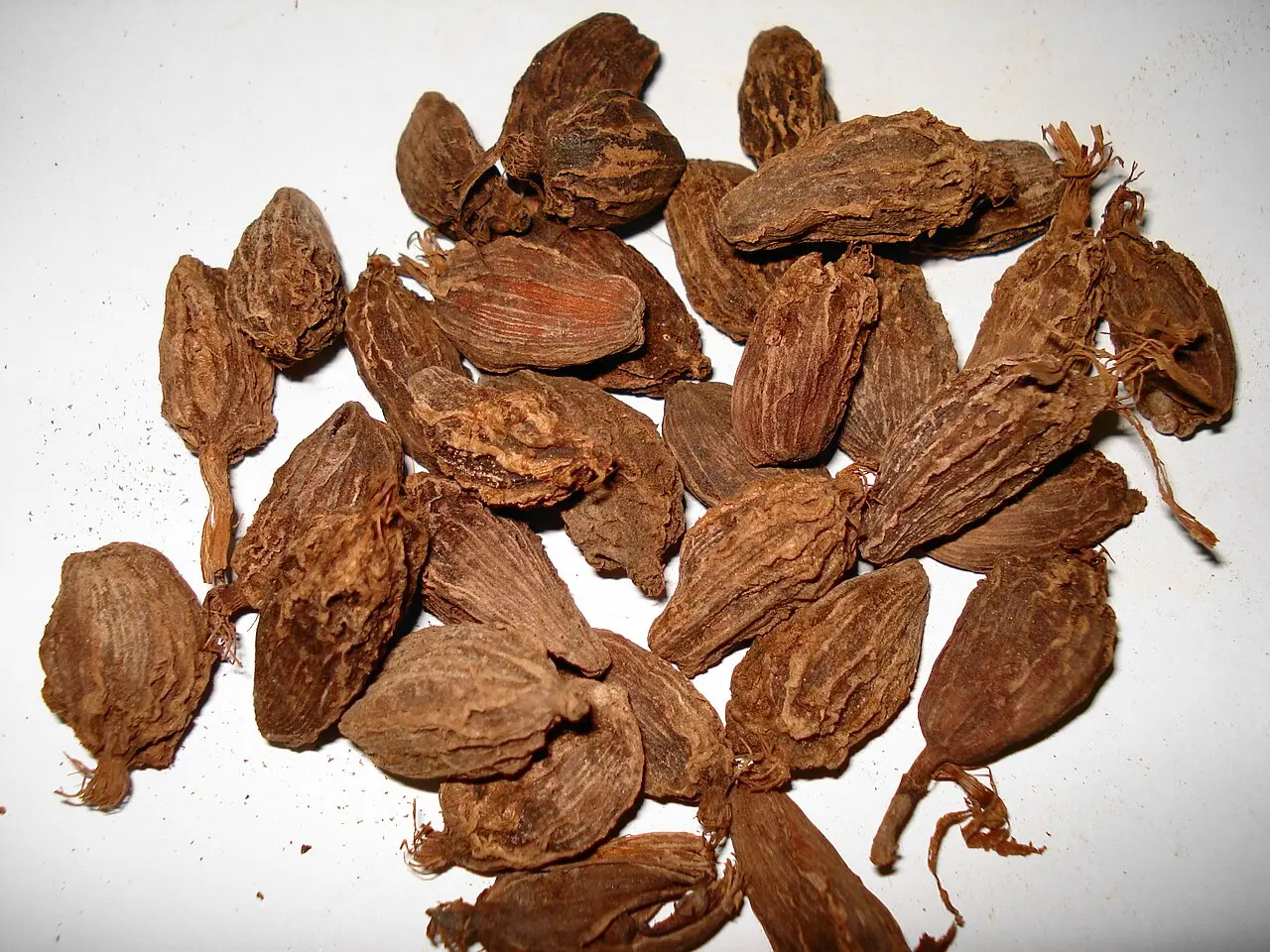
SpiceBlack cardamom
बड़ी इलायची (Badi elaichi)
 Spice
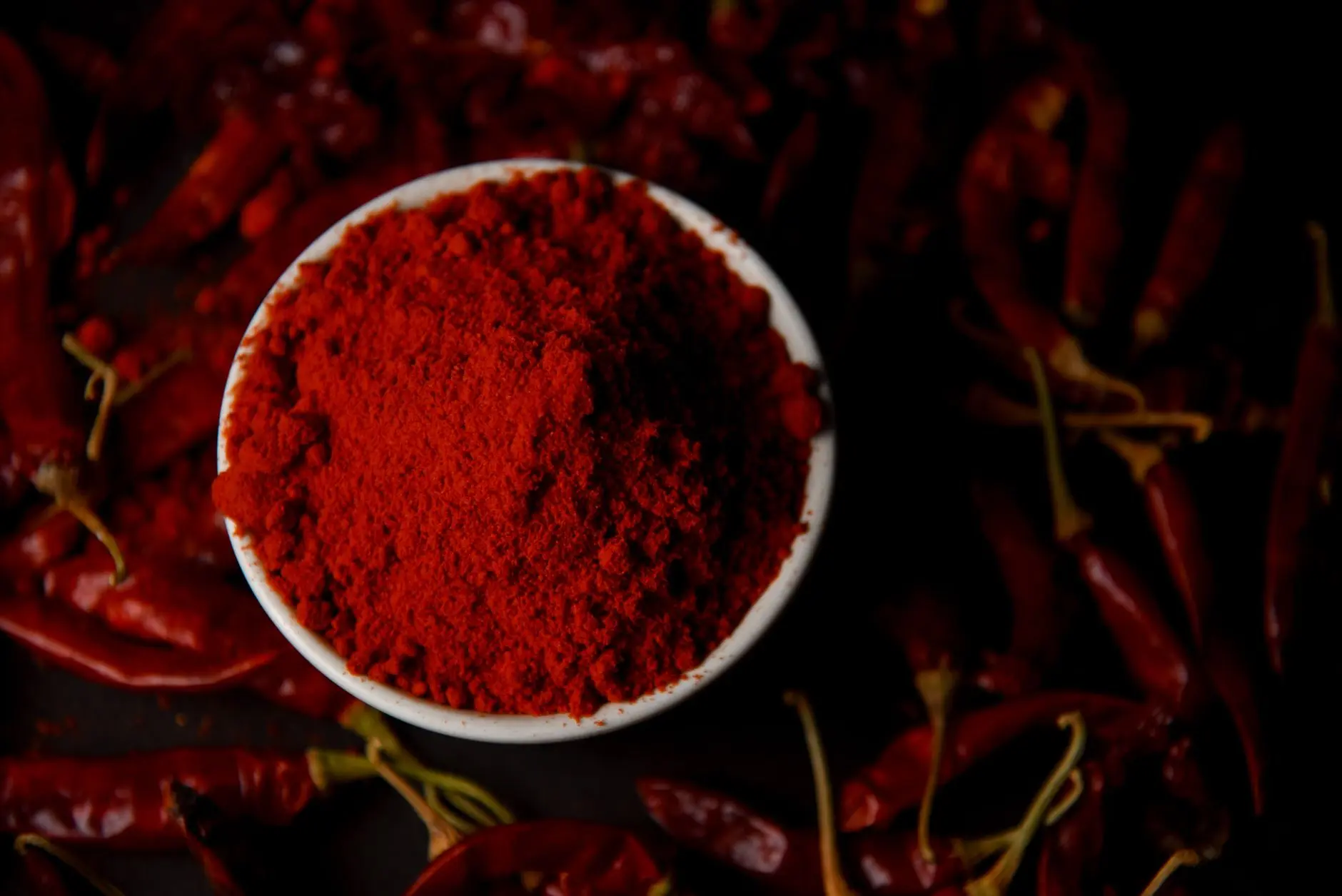
SpiceRed chilli powder
लाल मिर्च पाउडर (Lal mirch powder)
 Spice
SpiceAsafoetida
हींग (Hing)
 Spice
SpiceBlack pepper
काली मिर्च (Kali mirch)
 Spice
SpiceBlack salt
काला नमक (Kala namak)
 Spice
SpiceCarom seeds
अजवाइन (Ajwain)