
What it is
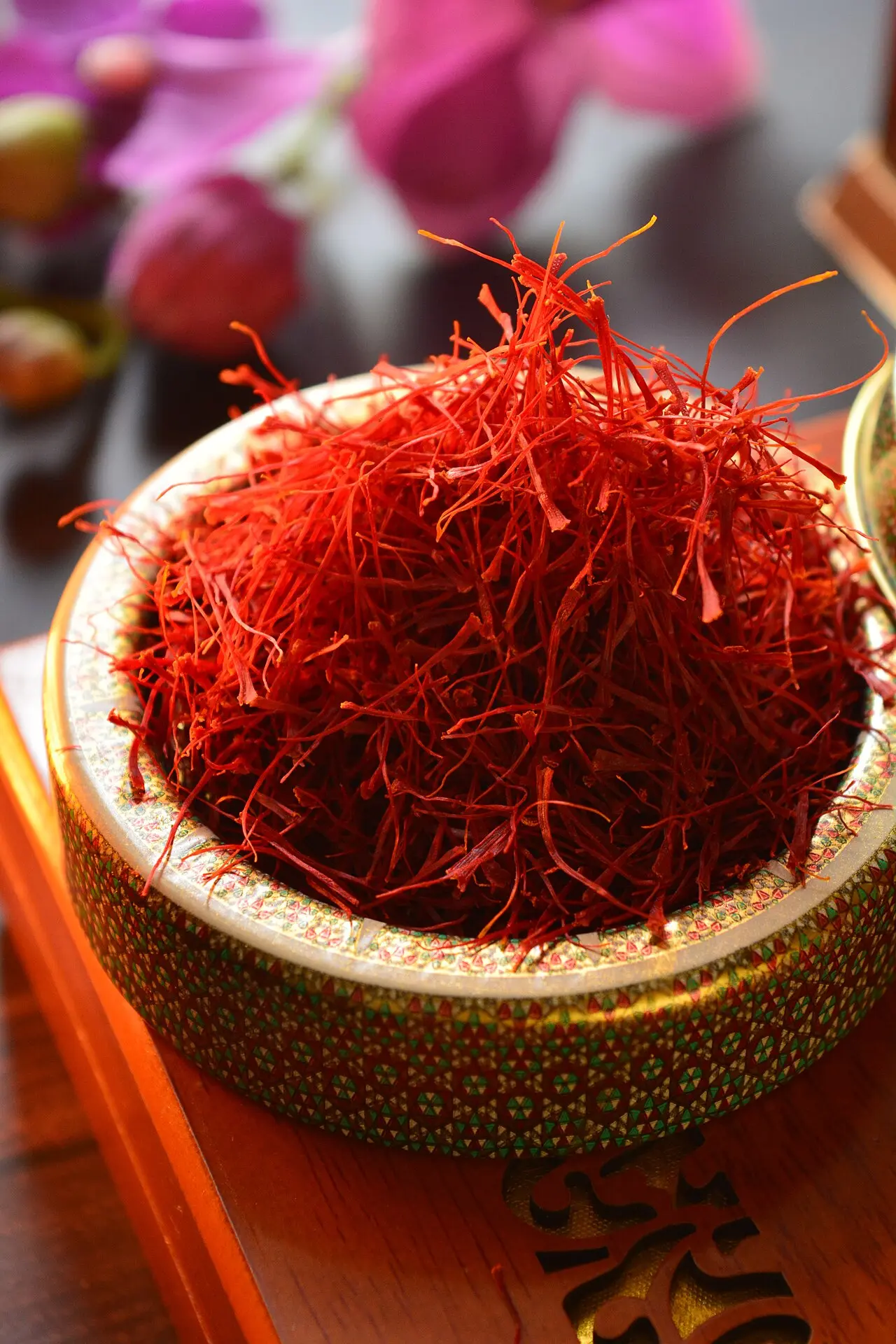
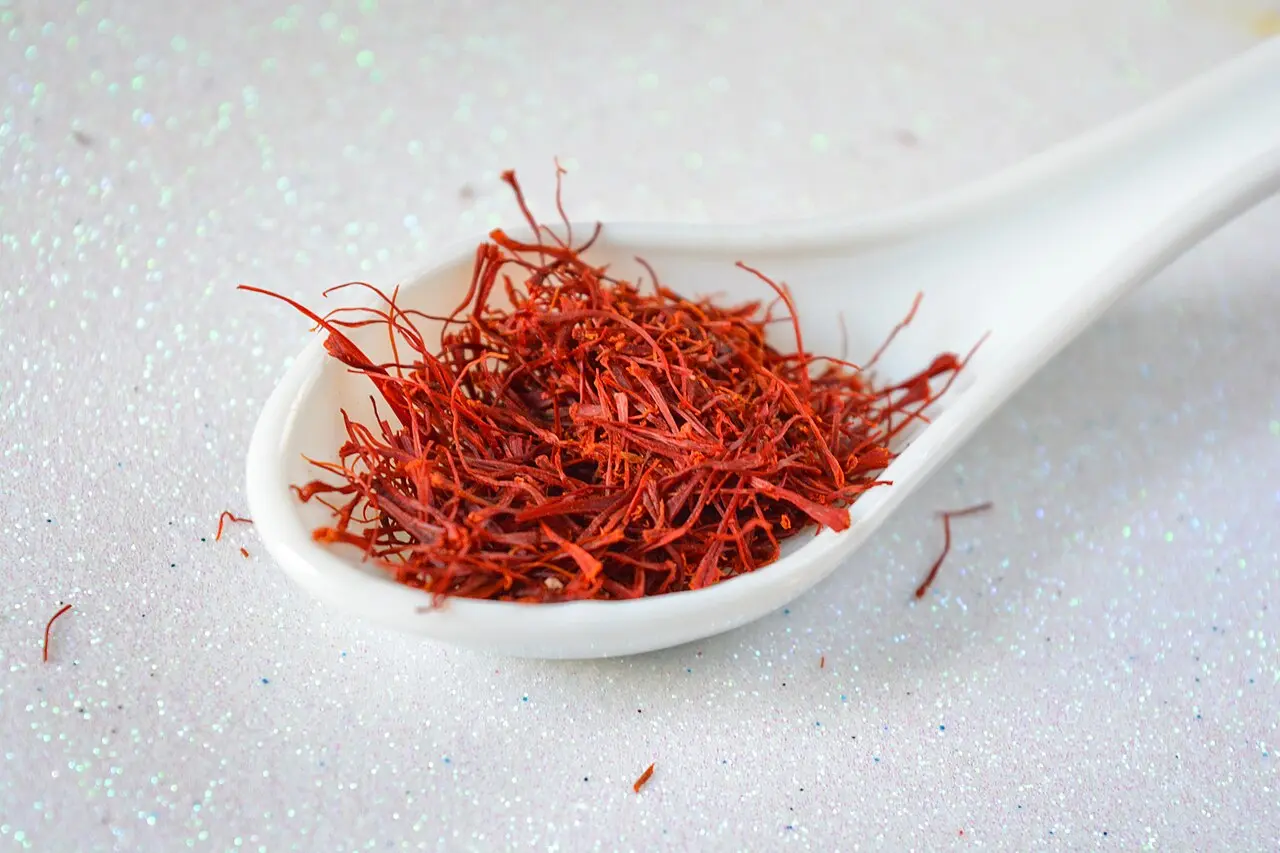
Saffron, or Kesar, is the dried trifid stigmas and style tops of Crocus sativus L., a fall-blooming perennial in the iris family.
You’ll mostly buy it as whole red threads; it’s also sold as a dry powder.
Flavour and aroma
It has a sweet, honey-like aroma with subtle grassy notes and a gently floral, sweet-musky presence. When infused, it shows warm, hay-like earthy undertones and a mildly bitter taste.
Cooking with it
When to add it
For desserts, soak the threads in warm milk or sugar syrup and fold into shrikhand, kesar peda, rasmalai, or kesari bath.
For rice, steep Kesar in warm milk or water and sprinkle over the layered rice before the final steaming; this is standard in Awadhi and Hyderabadi biryanis.
For drinks, steep the threads in warm milk, green tea, or festive spiced drinks. It’s essential in Kashmiri kahwa along with green cardamom and sliced almonds.
Substitutes
- Safflowermimics color only and lacks true saffron flavor
- Turmericuse a tiny pinch for color only; flavor profile is noticeably different
Origin and where it grows
Saffron is indigenous to the Mediterranean and Southwest Asia. In India it has been cultivated extensively in the Kashmir Valley for centuries. Jammu and Kashmir is the predominant producing region, centered around the Karewa highlands; Himachal Pradesh also cultivates it in select temperate hill pockets. Kashmir Saffron holds an official Geographical Indication for its long, thick stigmas, dark red color, and high crocin content.
Grown in
Notable varieties
- Kashmir SaffronGI tagged
Jammu and Kashmir
Buying and storing
How to pick good quality
Look for deep crimson red threads with flared tips and minimal yellow style remnants at the base.
Simple adulteration check
Drop threads in hot water: pure saffron slowly releases a clear golden yellow and stays intact. Dyed adulterants can bleed an immediate crimson red and fall apart.
Storage
Store Kesar in an airtight glass container in a cool, dark, dry cupboard, away from light and humidity.
Shelf life: Up to two to three years when stored airtight away from moisture and UV light.
Nutrition
Its color and aroma come largely from the carotenoids crocin and crocetin, with safranal and picrocrocin also contributing.
Frequently asked questions
How do I use saffron for biryani?
Steep the threads in warm milk or water and drizzle over the layered rice before the final dum. It adds fragrance and a golden hue.
How can I check if my saffron is pure?
Put a few threads in hot water. Pure saffron slowly releases a clear golden yellow and remains intact; fakes can bleed a quick crimson red and disintegrate.
What Indian dishes use saffron?
Kashmiri kahwa, Awadhi and Hyderabadi biryanis, and mithai like kesar peda, shrikhand, rasmalai, and kesari bath.
How should I store saffron and how long does it last?
Keep it in an airtight glass jar in a cool, dark, dry cupboard. Properly stored threads keep their aroma and color strength for up to two to three years.
What can I substitute for saffron?
Safflower petals can mimic the orange-red color but not the aroma. In a pinch, use a tiny pinch of turmeric for color only; the flavor is different.
Related ingredients
 Spice
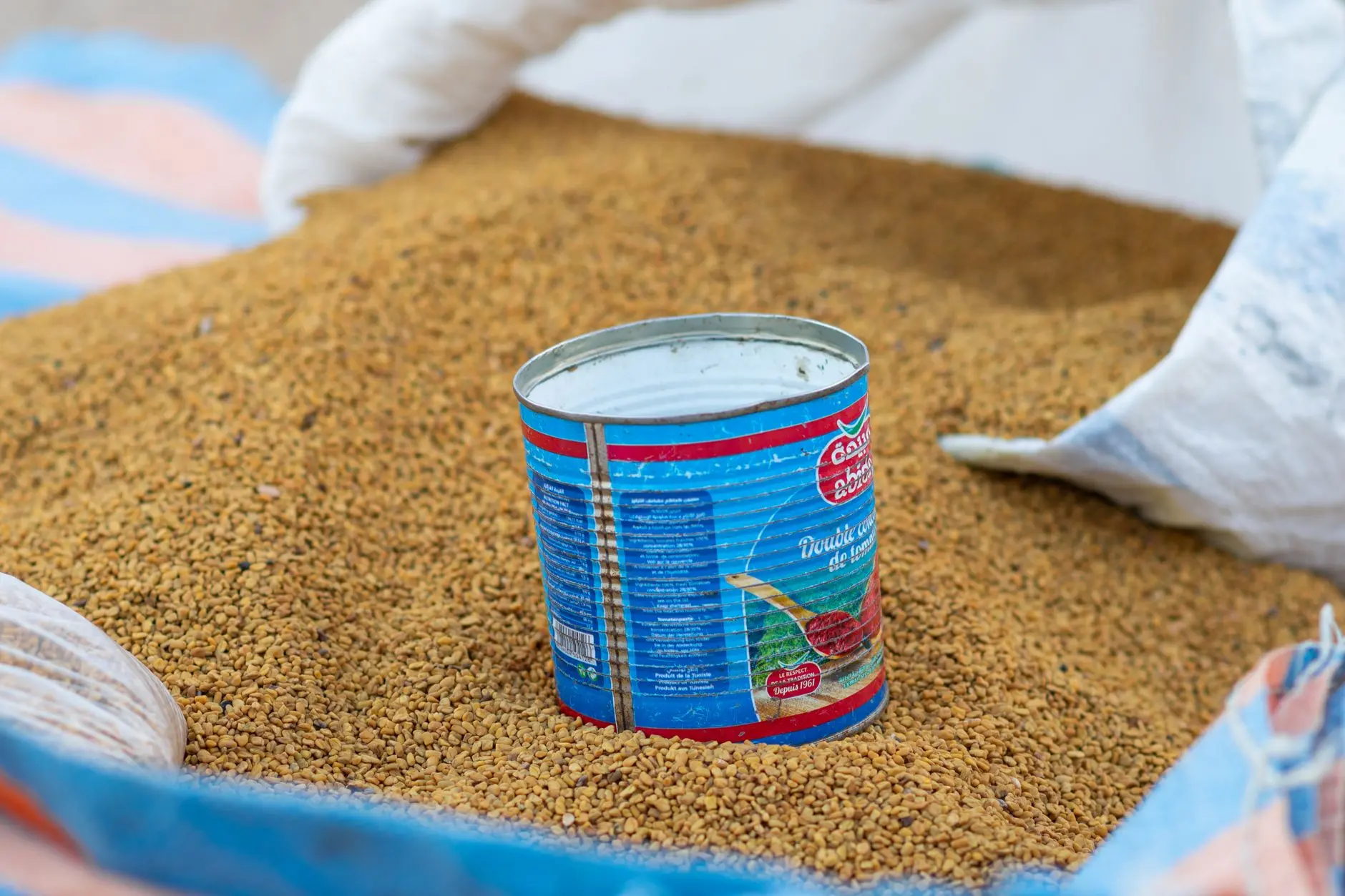
SpiceFenugreek seeds
मेथी दाना (Methi dana)
 Spice
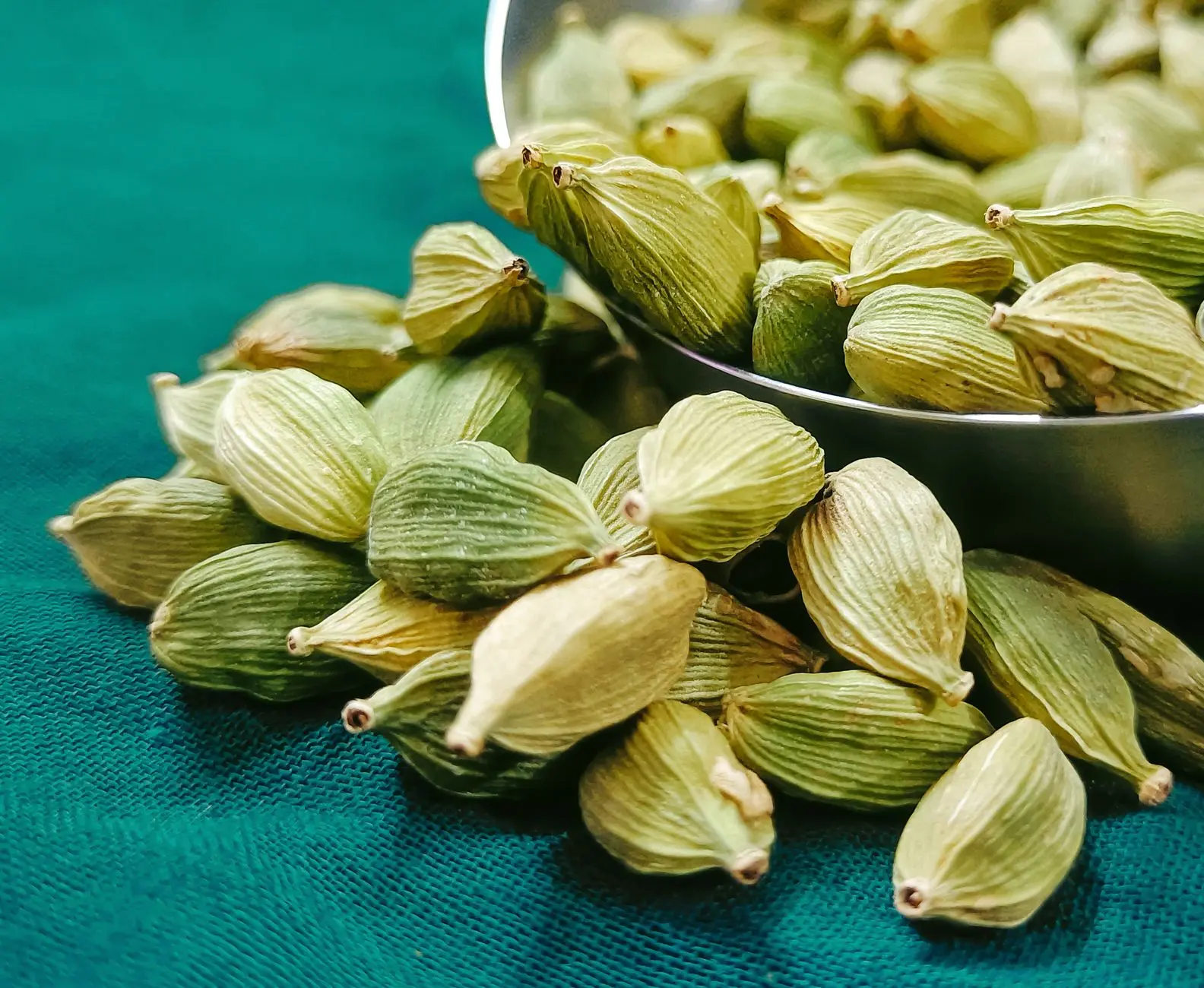
SpiceGreen cardamom
छोटी इलायची (Chhoti elaichi)
 Spice
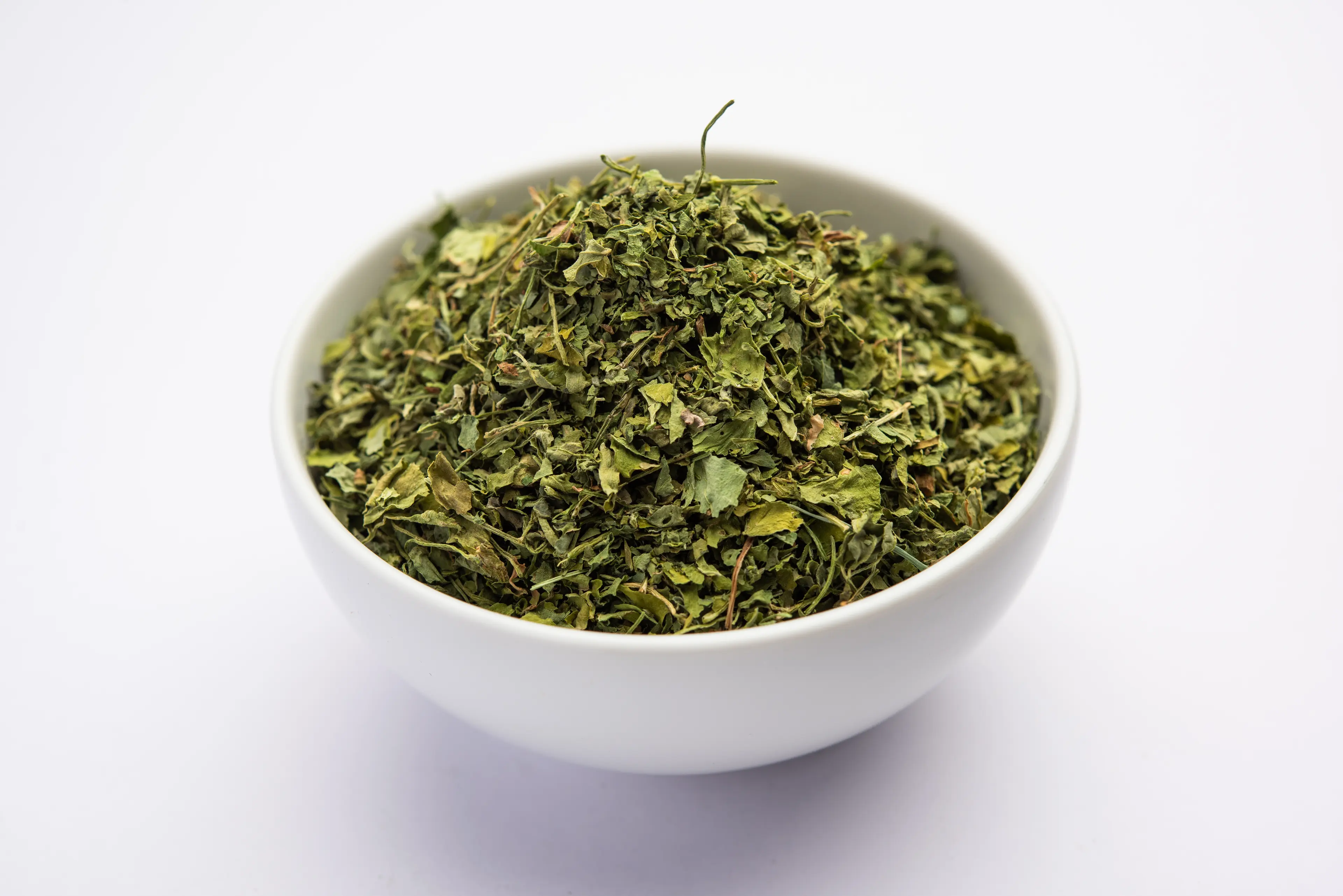
SpiceKasuri methi
कसूरी मेथी (Kasuri methi)
 Spice
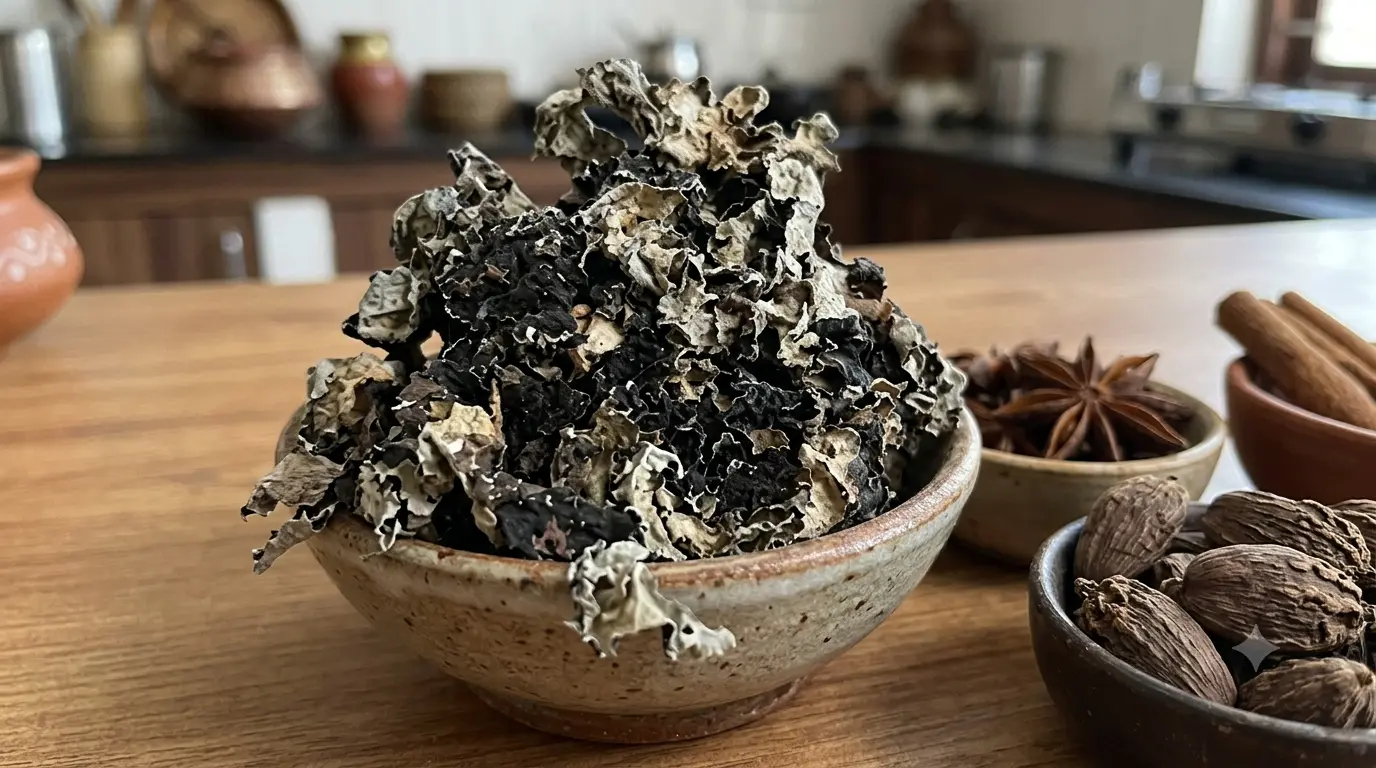
SpiceStone flower
पत्थर फूल (Patthar phool)
 Spice
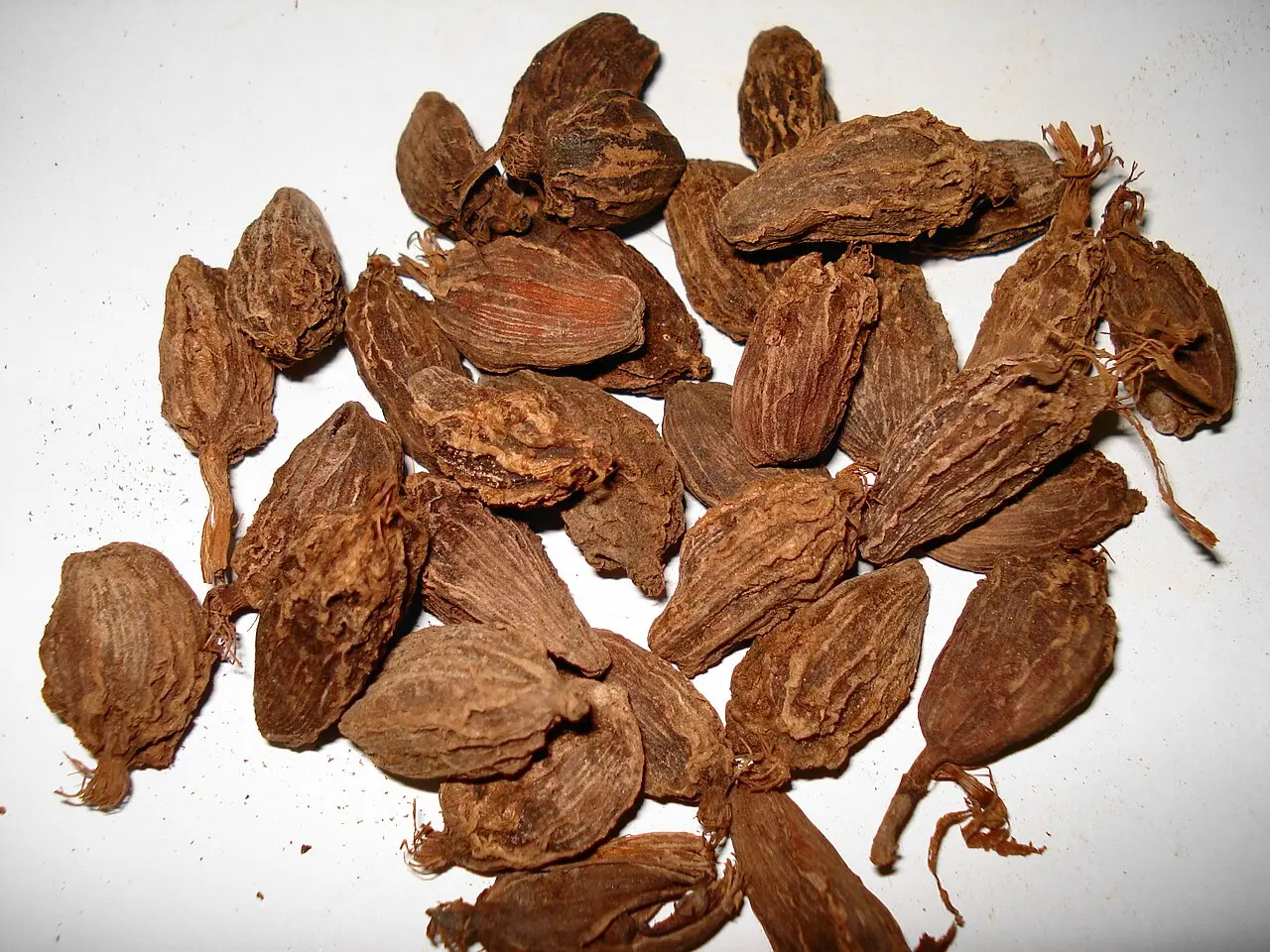
SpiceBlack cardamom
बड़ी इलायची (Badi elaichi)
 Spice
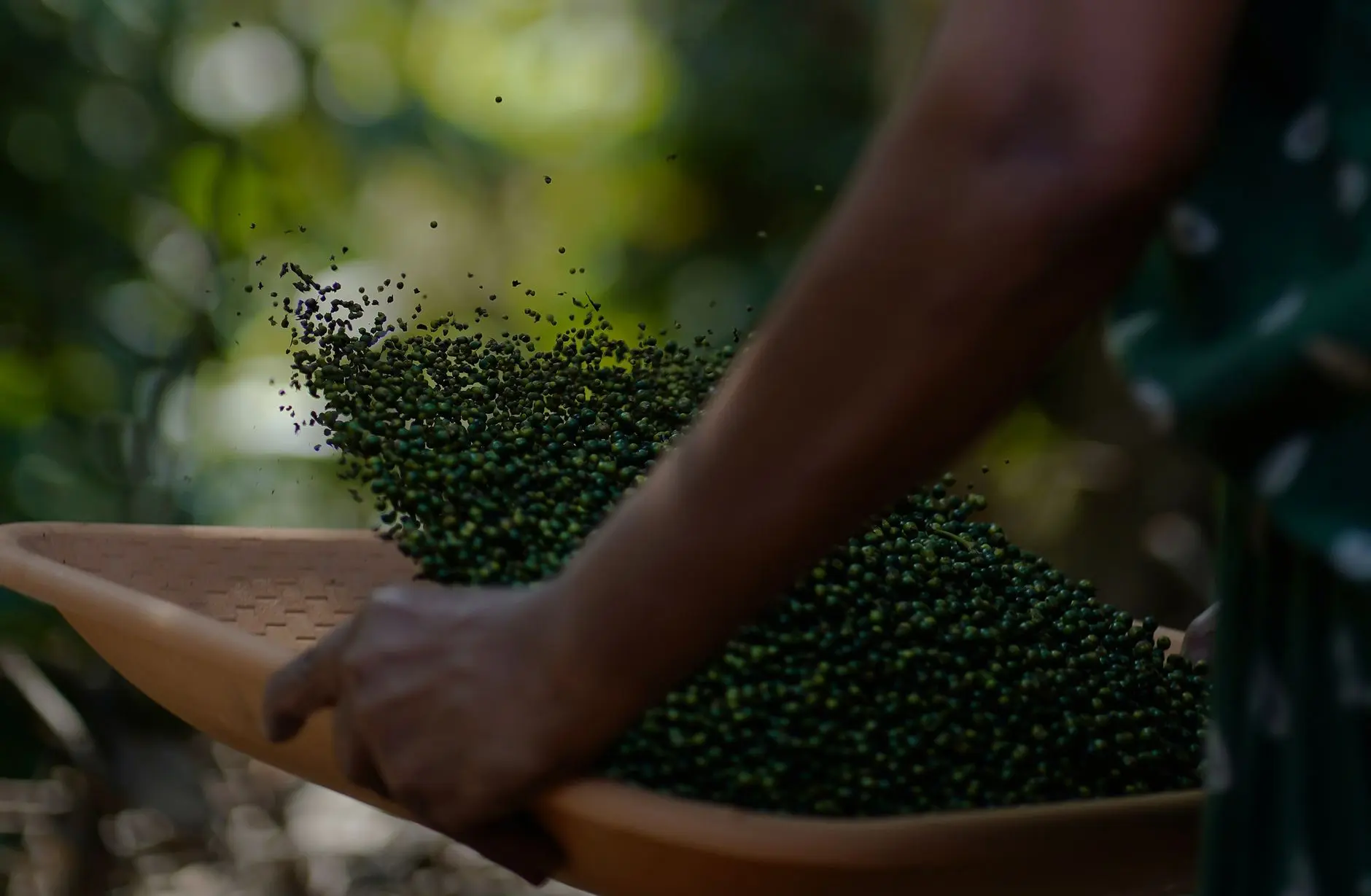
SpiceBlack pepper
काली मिर्च (Kali mirch)